The Evolution of Botanical Actives
Botanical ingredients have long been widely used in cosmetic formulations, valued for their naturally derived bioactive compounds and strong consumer appeal. However, as skincare innovation increasingly focuses on higher efficacy, advanced delivery systems, and formulation precision, traditional plant extracts are beginning to reveal certain limitations — particularly in terms of stability, consistency, and bioavailability.
This industry shift is driving growing interest in Plant Cell-Derived Exosomes (Plant Cell-Derived EVs/PDNVs), an emerging biotechnology platform that combines plant science with next-generation active delivery concepts.
More Than a Conventional Plant Extract
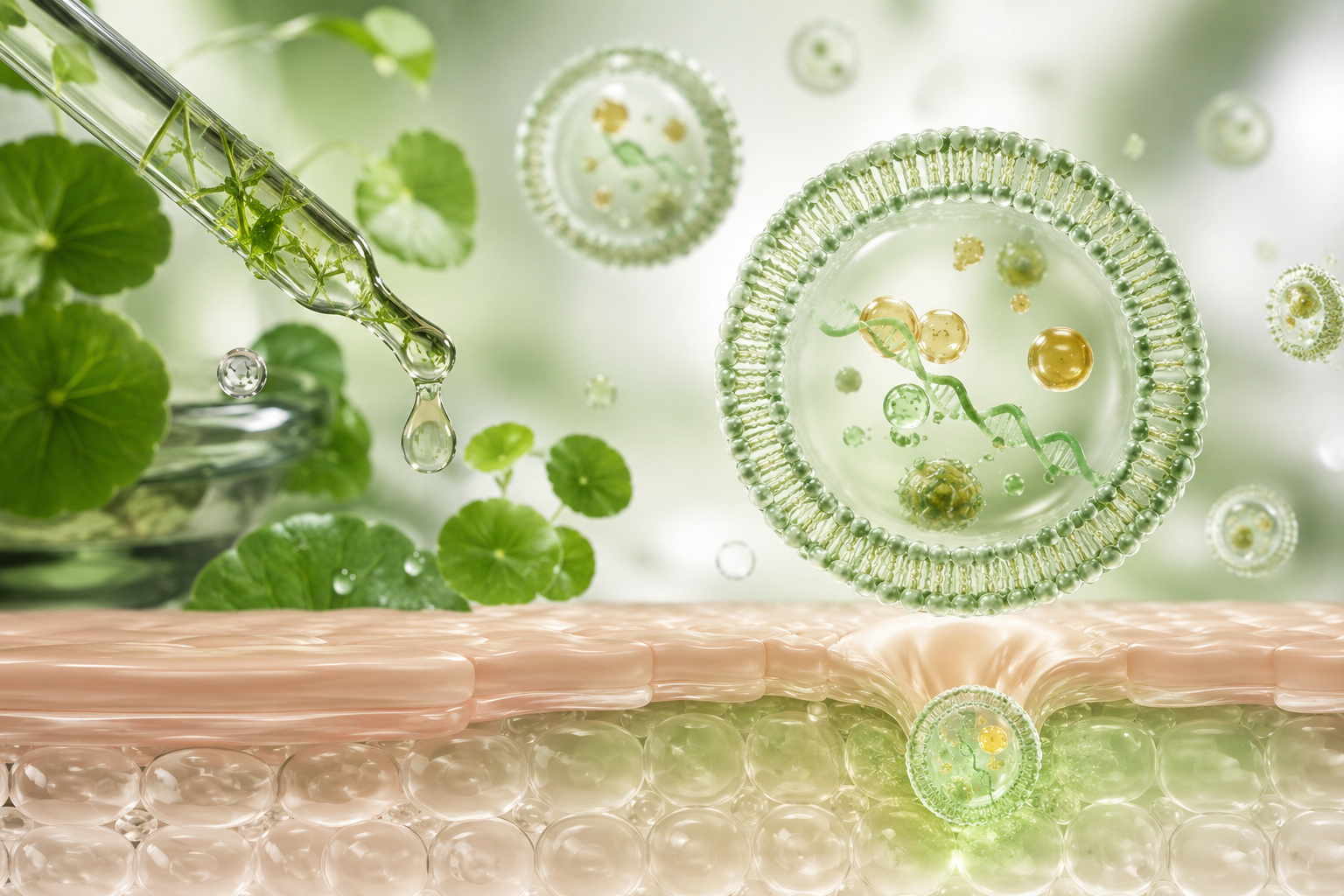
Unlike conventional botanical extracts obtained through solvent or physical extraction processes, plant cell-derived exosomes are nano-sized extracellular vesicles produced through controlled plant cell culture systems.
Their lipid bilayer membrane structure helps encapsulate and protect bioactive molecules, including lipids, proteins, polyphenols, and signaling compounds. This vesicular structure helps improve the stability of sensitive active ingredients while better maintaining their integrity throughout formulation development and application.
A Smarter Delivery Approach
Delivery efficiency is another area attracting significant attention. Traditional plant extracts often have relatively complex compositional profiles and may face challenges related to skin penetration and active utilization.
Plant cell-derived exosomes, typically ranging from 30–200 nm, offer a more refined delivery system with the potential to enhance interaction with the skin barrier and improve the bioavailability of functional actives. As the industry increasingly explores targeted and efficient delivery technologies, nano-scale plant vesicles are becoming an important area of cosmetic research and formulation development.
Consistency Through Biotechnology
Production consistency is also emerging as a key advantage. Conventional botanical ingredients are frequently influenced by seasonal variation, climate conditions, and agricultural sourcing, which may result in batch-to-batch variability.
By comparison, plant cell culture technology enables scalable, standardized, and controllable production processes, helping achieve more reproducible quality and stable performance while reducing dependence on traditional agricultural resources.
The Future of Botanical Innovation
As cosmetic biotechnology continues to evolve, plant cell-derived exosomes are increasingly being viewed not simply as another botanical ingredient, but as a new platform for next-generation skincare innovation.
Combining sustainability, advanced delivery capability, and high-performance bioactivity, plant cell-derived exosomes represent a growing convergence of plant science, biotechnology, and modern cosmetic formulation design.
Post time: May-08-2026